



Many film fans celebrated the 2018 release of Black Panther and the hero from Wakanda. Audiences wore traditional African clothing, applied patterns on faces, and enjoyed a story about an African nation hidden from colonial conquest. This movie joined the billion dollar club within a month and outranked many other superhero films.
Black Panther Afrofuturism became a phenomenon introducing new viewers to an imaginative approach blending history, science fiction, and cultural pride. Afrofuturism uses narrative, music, and art to explore Black experiences and possible futures through a futuristic lens.
This blog explains why Black Panther Afrofuturism still defines Afro Futurism beyond cinema and invites your participation through Fantasy In Black coloring books.
Origins of Afrofuturism
Afrofuturism refers to a creative movement exploring Black identity through speculative narratives, art, and technology. Writers, musicians, and artists combine African history with futuristic elements to imagine liberated futures.
Black Panther Afrofuturism draws from these traditions and presents an African civilization untouched by colonial rule. Early Afrofuturists include musician Sun Ra, writer Octavia Butler, and the P‑Funk collective; these pioneers blended science fiction with Black culture to imagine cosmic possibilities.
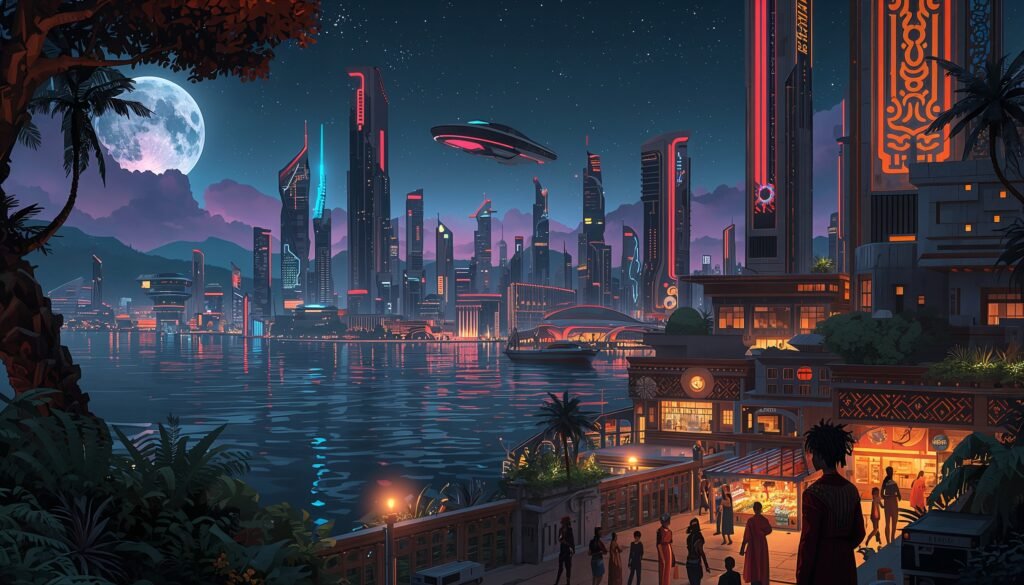
Wakanda uses Vibranium, a fictional metal, to power advanced technology and support its people. This vision reframes Africa from a continent in need of rescue to a place of innovation and strength. Through Afrofuturism, creators encourage audiences to envision possibilities beyond oppressive realities.
Representation and Culture
Women occupy leadership roles within the story and drive major events. Shuri crafts groundbreaking inventions while General Okoye commands a team of fearless warriors. These characters challenge tropes and portray Black women in an intelligent, courageous, essential role within national life.
Black Panther features a predominantly Black cast and marks the first mega‑budget production directed and co‑written by African Americans with a Black hero. Viewers celebrated by wearing dashikis and face paint, expressing pride and solidarity.
Moreover, Wakanda balances tradition and innovation by honoring rituals while adopting futuristic science. This balance highlights the importance of cultural preservation in a modern context. Audiences gain pride when they witness positive portrayals of African heritage.
Political and Social Themes
Conflict between T’Challa and Erik Killmonger reveals tensions between isolationism and global responsibility. Killmonger, raised in Oakland, channels anger from racial injustice and displacement. He believes Wakanda should share resources to uplift oppressed communities.
Meanwhile, T’Challa must decide whether to protect tradition or engage with the world. Their debate invites viewers to reflect on colonial history, slavery, and the African Diaspora. Black Panther premiered during a period when the Black Lives Matter movement highlighted systemic racism, which deepened audience connection. Through these characters, the story explores real world issues and encourages dialogue.
Economic Impact and Box Office
In 2018, the film surpassed one billion dollars in global ticket sales and ranked among top superhero movies. This success dispelled myths about profitability of films led by Black casts. Critics praised the direction, story, and visuals. Consequently, Black Panther Afrofuturism influenced Hollywood decisions and encouraged inclusive storytelling. Additionally, the film’s financial achievements opened doors for other projects featuring Black heroes and creators.
Technology, Science, and Education
Shuri plays a teenage engineer and inspires young viewers to pursue careers in science, technology, engineering, and mathematics. Her inventions demonstrate how creativity and technical skill deliver solutions for communities. Wakanda’s advanced medical devices, transportation systems, and weapons showcase a futuristic society built on scientific progress.
This portrayal motivates students and educators to explore STEM fields. Moreover, scholars discuss how Black Panther Afrofuturism fosters interest in science education and innovation. Commentators argue the film encourages Pan‑African political engagement and inspires radical approaches to building thriving communities.
Cultural Preservation and Diaspora
Ancestral connections appear in scenes where T’Challa speaks with forebears on a spiritual plane. These moments link past and present and emphasize respect for elders. Killmonger’s longing for a homeland reflects struggles within the African Diaspora.
Through these narratives, Black Panther Afrofuturism encourages viewers to reclaim heritage and process collective trauma. Cultural preservation emerges central, resonating across communities. This narrative invites reflection on identity, belonging, and responsibility toward descendants.
Community and Creativity: Fantasy In Black
Many fans expanded conversations beyond the screen by organizing book clubs, art projects, and workshops inspired by the film. Fantasy In Black embraces this energy through coloring books celebrating African folklore, futuristic cityscapes, and heroes influenced by Wakandan spirit.
Coloring prompts open doors for imaginative storytelling, relaxation, and learning. While shading intricate patterns and characters, you engage with themes of representation and empowerment. Fantasy In Black encourages families and friends to discuss Afrofuturism while enjoying creative activities together.
Through these activities, you participate in Wakanda Afrofuturism and build connection to imaginative futures.
Continuing Legacy and Exhibitions
Influence of Black Panther Afrofuturism extends beyond cinema. In 2023 the Smithsonian’s National Museum of African American History and Culture opened Afrofuturism: A History of Black Futures. This show features Chadwick Boseman’s costume and more than one hundred objects from music, film, fashion, and theater.
Curators examine the movement’s history and broad impact. This exhibition runs through August 2024 and underscores how Black Panther represents the first superhero of African descent in mainstream comics and cinema. Visitors view objects from Afrofuturism pioneers and learn how art, music, activism, and culture shape visions of liberated futures. Such recognition reflects the enduring legacy of Wakanda Afrofuturism and highlights ongoing efforts to celebrate pioneers.
Conclusion
Black Panther Afrofuturism continues shaping conversations about Afrofuturism, culture, and representation. This film invites viewers to imagine empowered futures and challenges stereotypes. Afrofuturism encourages creative exploration through stories, music, technology, and art.
You have an opportunity to join this journey by revisiting the film, discussing its themes, and engaging in artistic activities. Obtain a Fantasy In Black coloring book to experience a hands-on approach to Afrofuturism. Use your creativity to shade characters and landscapes inspired by African heritage and futuristic design. Share your work with friends and family and continue exploring how Black Panther shaped Afrofuturism and beyond. Your participation will help sustain dialogue on representation, innovation, and community empowerment.
Leave a Reply